
Sozni vs. Aari: Understanding the Magic of Kashmiri Embroidery
Apr
Sozni vs. Aari: Understanding the Magic of Kashmiri Embroidery
When you look closely at a traditional Kashmiri textile, you are not just looking at a piece of fabric; you are reading a story woven in thread. The true soul of Kashmir’s textile heritage lies in its painstaking, intricate hand-embroidery. It is the needlework that breathes life into plain wool, cotton, and Pashmina, transforming them into wearable masterpieces that command global admiration.
For anyone looking to invest in authentic Kashmiri ethnic wear or home decor, understanding the different types of embroidery is crucial. The valley boasts several distinct styles of needlework, but two stand undisputed at the forefront: Sozni and Aari. While both are undeniably beautiful, they differ vastly in their techniques, textures, historical origins, and the final visual impact they deliver.
If you have ever found yourself confused between these two iconic styles, this comprehensive guide will break down the techniques, compare their characteristics, and help you choose the perfect hand-embroidered piece for your wardrobe.
Section 1: The Delicate World of Sozni Embroidery
When we speak of absolute luxury, royal heritage, and microscopic precision in Kashmiri textiles, we are speaking of Sozni. Also known as Sozan Kaari, this form of embroidery is widely considered the most sophisticated and delicate needlework to emerge from the Kashmir Valley.
The Technique and Tools
The word “Sozni” is derived from the Persian word ‘Sozan’, which translates to needle. Artisans use an incredibly fine, specialized needle to execute this craft. The threads used are typically premium silk or high-grade staple yarn. Because the stitches are so minuscule and tightly packed, Sozni is almost exclusively performed on very fine, high-quality base fabrics like pure Pashmina, fine cashmere, and premium merino wool. Attempting Sozni on a thick or coarse fabric would simply snap the delicate threads.
The Dorukha Magic
One of the most mind-boggling achievements of master Sozni artisans is the creation of a Dorukha shawl. In this technique, the stitching is executed so flawlessly that the embroidery appears identical on both sides of the fabric. There are no loose threads, no messy knots, and no “wrong side.” In some highly advanced pieces, artisans even manage to use different colored threads on each side, creating a reversible masterpiece.
The Staggering Timeframe
Sozni is an exercise in extreme patience. The motifs—often tiny paisleys (Ambis), almond shapes, and abstract geometric patterns—are meticulously filled in over months. A fully covered Sozni Pashmina shawl, known as a Jamawar, can take a single master artisan anywhere from one to three years to complete. This immense dedication of human time and eyesight is exactly why authentic Sozni pieces are treated as high-value heirlooms.
Section 2: The Bold Strokes of Aari Work
If Sozni is a quiet, delicate whisper, Aari is a vibrant, joyous song. Aari work, also globally recognized as crewel embroidery, is famous for its thick, bold, and highly textured patterns that instantly catch the eye from across a room.
The Technique and Tools
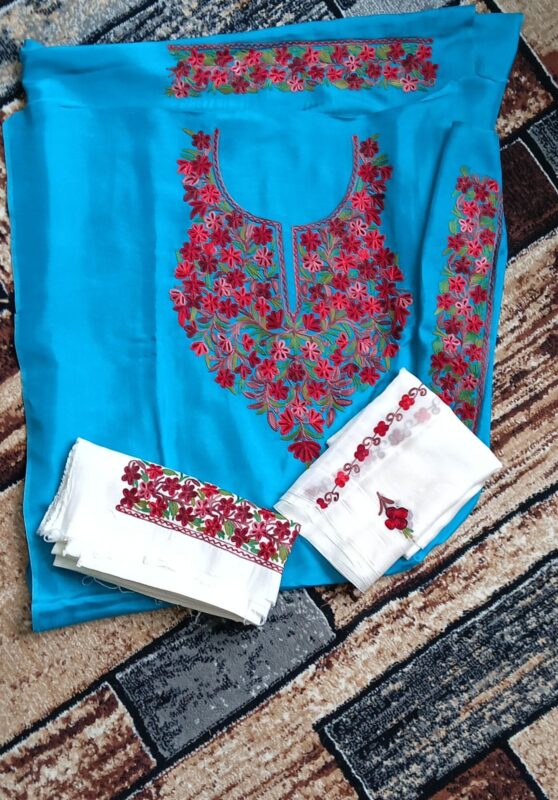
Aari embroidery completely abandons the standard needle. Instead, artisans use a specialized tool called an ‘Aar’, which closely resembles a miniature crochet hook or a cobbler’s awl. The artisan pushes the hook through the fabric, catches the thread from underneath, and pulls it up to create a continuous loop. This process is repeated rapidly, resulting in a series of concentric chain stitches.
The Visual Impact and Materials
Because the hook technique allows for faster stitching and utilizes thicker woolen, silk, or synthetic threads, Aari work produces a raised, highly textured surface. It has a beautiful, three-dimensional pop. The motifs in Aari are generally larger and heavily inspired by the flora of Kashmir—think blooming lotus flowers, bold Chinar leaves, vines, and vibrant cherry blossoms.
Aari is also incredibly versatile when it comes to the base canvas. While it looks stunning on woolen Pherans and shawls, it is robust enough to be done on heavy Dasooti cotton, linen, leather, and suede. This is why Aari work is heavily featured not just in apparel, but in Kashmiri home decor, including heavy drapes, cushion covers, and intricate floor rugs.
Section 3: The Side-by-Side Comparison
To help you make an informed decision when adding a piece of Kashmiri craftsmanship to your collection, here is a direct comparison between the two styles:
- Visual Texture: Sozni is flat, smooth, and seamlessly integrated into the fabric, almost as if it were painted on. Aari is raised, chunky, textured, and stands out boldly from the base material.
- Weight and Drape: Because Sozni uses microscopic silk threads on fine Pashmina or light wool, the final garment remains incredibly lightweight and easy to drape. Aari work adds significant weight to the fabric due to the thick layers of chain stitching, giving the garment a more structured, heavy fall.
- Time and Cost: Given the years it takes to complete a dense Sozni shawl, the cost is significantly higher, positioning it firmly in the luxury investment category. Aari work, while still a laborious hand-crafted art, can be completed faster due to the hook technique, making it a more accessible entry point into authentic Kashmiri crafts.
- Durability and Care: Sozni is delicate; it is prone to snagging if brushed against sharp jewelry and strictly requires professional dry cleaning. Aari is highly robust and durable, capable of withstanding the friction of daily wear on coats, bags, and upholstery.
Section 4: Choosing the Right Piece for Your Wardrobe
So, which style of Kashmiri embroidery is right for you? The answer depends entirely on your budget, the occasion, and your personal aesthetic.
Choose Sozni if:
- You are looking for a timeless, formal accessory for a wedding, a gala, or a high-end corporate event.
- You want an heirloom piece to pass down to the next generation.
- You prefer understated, sophisticated elegance over loud, vibrant colors.
- You value the lightweight warmth of pure Pashmina paired with microscopic craftsmanship.
Choose Aari if:
- You want a striking, colorful statement piece for festive day-wear, winter brunches, or cultural gatherings.
- You are looking for a beautiful, heavily embroidered Pheran or jacket for everyday winter wear.
- You want to incorporate traditional Indian home styling into your living space via embroidered cushions or rugs.
- You desire the authentic Kashmiri aesthetic without the multi-year investment price tag of Sozni.
Section 5: Shop Authentic Embroidery at 3jar.com
Whether you find yourself drawn to the quiet luxury of Sozni or the bold vibrancy of Aari, the most important factor is authenticity. The rise of machine-made replicas has made it challenging to find genuine, hand-embroidered Kashmiri goods online. Machines can mimic the look of Aari and Sozni, but they cannot replicate the soul, the slight, beautiful imperfections of the human hand, or the durability of traditional threadwork.
At 3jar.com, we take the guesswork out of buying authentic Kashmiri crafts. Our curated catalog directly supports the master artisans of the valley, offering you verifiable, handcrafted apparel and home decor.
Shopping for premium embroidery on our platform is designed to be as seamless and secure as the stitches themselves:
- Guaranteed Quality: Every Sozni shawl and Aari Pheran is subjected to rigorous quality checks before it makes it to our digital storefront.
- Secure and Flexible Payments: We utilize industry-standard SSL encryption. You can pay securely using credit/debit cards, net banking, or choose instant, seamless checkouts via UPI (Google Pay, PhonePe, Paytm).
- Transparent Delivery: Authentic art takes time, but delivery shouldn’t. Once dispatched, your carefully packaged order will reach you within 5 to 14 business days.
- Free Shipping Offer: We charge a nominal flat rate of ₹150 for standard deliveries. However, because premium embroidered pieces are an investment, we offer completely free shipping on all orders above ₹5000.
An embroidered Kashmiri garment is more than just fabric and thread; it is a piece of history that you can wear. Explore the magnificent Sozni and Aari collections at 3jar.com today, and wrap yourself in the authentic art of the Himalayas.