
The Art of Kashmiri Papier-Mâché: A Journey from Waste to Wonder
Apr
The Art of Kashmiri Papier-Mâché: A Journey from Waste to Wonder
In an era dominated by automated assembly lines, fast fashion, and plastic mass production, there is a growing, profound desire to return to authenticity. Modern homeowners and interior designers are increasingly seeking out decor that tells a story—pieces that carry the weight of history, the warmth of human touch, and the unmistakable signature of master craftsmanship. Among the most exquisite and historically rich of these artisanal traditions is Kashmiri Papier-Mâché.
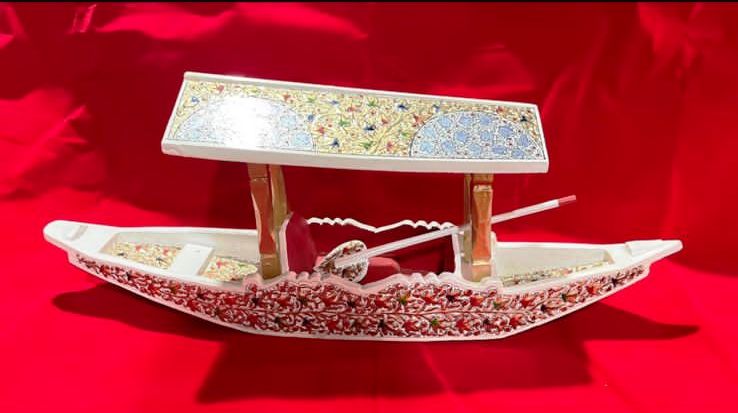
Known locally as Kari Kalamdani (the art of the pencase), this delicate craft is a mesmerizing alchemy that transforms discarded waste paper into breathtaking, luxurious artifacts. From intricately painted jewelry boxes and ornate vases to grand decorative wall plates, Kashmiri Papier-Mâché is a testament to the boundless creativity of the human spirit.
If you are looking to elevate your living space with handmade home decor that doubles as a conversation piece, understanding the legacy and laborious process behind this art form will deepen your appreciation. In this guide, we will journey through the 15th-century origins of this craft, decode the vibrant motifs painted by the artisans, and explore how you can curate these traditional Indian home styling pieces through authentic platforms like 3jar.com.
Section 1: The Historical Roots of Kari Kalamdani
To understand Kashmiri Papier-Mâché, we must travel back to the 15th century. The art form was not indigenous to the Himalayan valley; it was brought over by the revered Persian mystic and scholar, Mir Sayyid Ali Hamadani. When he traveled to Kashmir from Persia, he was accompanied by an entourage of highly skilled craftsmen, weavers, and artists.
These Persian artisans introduced the technique of making pen cases, small boxes, and book covers out of mashed paper and glue. Over the centuries, the local Kashmiri craftsmen adopted this technique, infusing it with their own indigenous floral motifs, color palettes, and cultural symbols. What began as a utilitarian method for creating lightweight storage items evolved under the patronage of Mughal emperors into a highly sophisticated, decorative art form reserved for royalty and nobility. Today, it stands as a pillar of Kashmiri cultural heritage.
Section 2: The Two-Step Miracle (The Process)
The creation of a single Kashmiri Papier-Mâché artifact is a grueling, time-intensive process that demands immense patience. It is divided into two distinct, highly specialized stages: Sakhtsazi (the making of the base structure) and Naqashi (the intricate surface painting). Usually, these two steps are performed by entirely different sets of artisans, each a master of their specific domain.
Stage 1: Sakhtsazi (Building the Foundation)
The journey begins with recycling. Artisans collect waste paper, cloth rags, and rice straw. This mixture is soaked in water for several days until it breaks down completely. It is then pounded relentlessly in a stone mortar until it forms a fine, uniform pulp.
To ensure the pulp binds securely and resists pests, the artisan mixes it with a natural adhesive made from rice glue (or modern equivalents) and a crucial traditional ingredient: copper sulfate. Once the pulp is ready, it is molded over wooden, clay, or brass bases to form the desired shape—be it a bowl, a vase, or an elephant figurine. The molded pulp is then left to bake in the harsh Himalayan sun for several days. Once completely bone-dry, the item is carefully cut away from the mold, glued back together, and smoothed down using files and pumice stones. Finally, it is coated with a layer of Gach (a mixture of gypsum and glue) to create a perfectly smooth, white canvas.
Stage 2: Naqashi (The Art of Illumination)
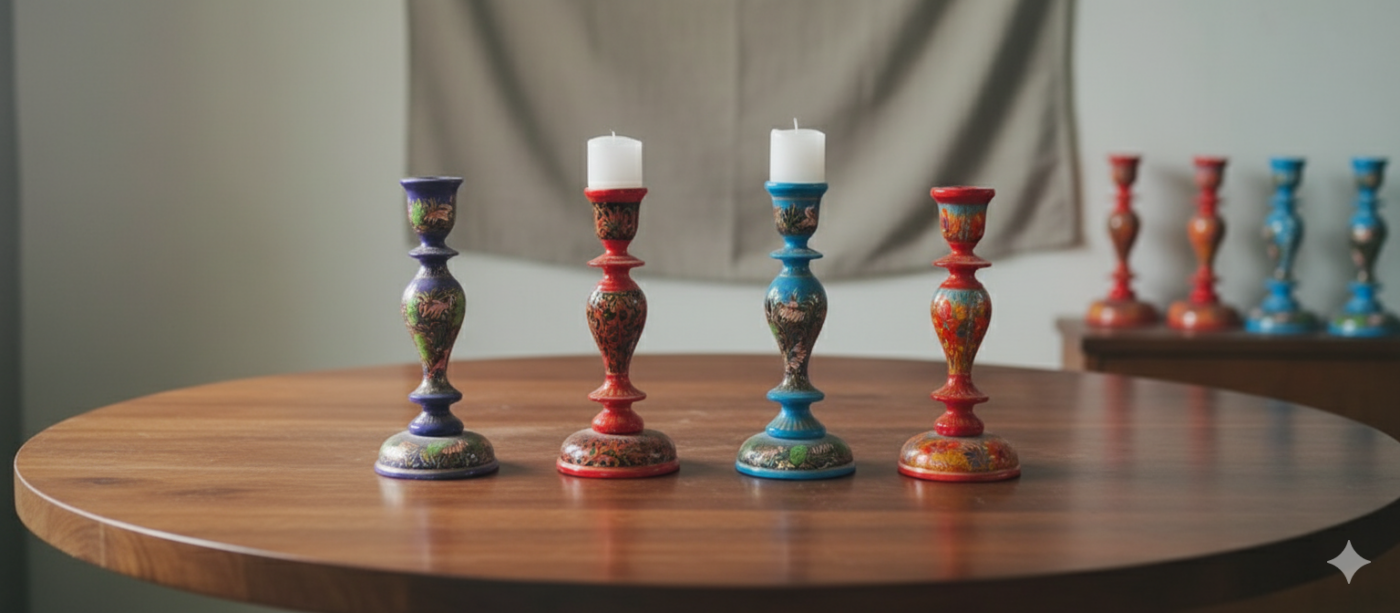
Once the Sakht (base) is flawless, it is handed over to the Naqash (painter). This is where the magic truly happens. The artisan applies a base color—often rich gold, deep black, regal red, or lapis lazuli blue. Then, without the aid of stencils or modern drafting tools, the artisan begins to paint microscopic, highly complex geometric and floral patterns freehand.
The precision required for Naqashi is staggering. To achieve the finest lines, traditional painters used specialized brushes crafted from the hair of a goat or, for the most delicate strokes, a single hair from the back of a cat’s neck. The paints were historically derived from natural pigments—ground stones, saffron, and organic dyes—though high-quality acrylics are often used today for durability. Once the painting is complete and dry, the artifact is sealed with multiple layers of clear varnish (often derived from amber or pine resin) to protect the artwork and give it that signature, glass-like glossy finish.
Section 3: Understanding the Motifs – Decoding the Art
A piece of Kashmiri Papier-Mâché is never just painted randomly; it is a canvas of cultural symbolism. The motifs are deeply inspired by the stunning natural beauty of the Kashmir Valley and its historical Persian ties. When you buy Kashmiri crafts, you are acquiring a piece of this visual poetry.
- Hazara (The Thousand Flowers): As the name suggests, this motif involves covering the entire surface of the object with a dense, microscopic network of tiny flowers—so many that they appear impossible to count. It represents the spectacular spring blooms of the Kashmir Valley. The sheer concentration required to paint a Hazara pattern makes these pieces highly valuable.
- Gul-e-Ander-Gul (Flower Within a Flower): This is a highly complex, psychedelic pattern where smaller floral designs are painted inside the petals of larger flowers, creating an illusion of infinite depth. It is a testament to the artisan’s control over their brush.
- The Chinar Leaf: The Chinar tree is the majestic symbol of Kashmir. Its distinct, broad, palmate leaf—especially when it turns a fiery crimson and gold in the autumn—is one of the most prominent motifs in Naqashi, symbolizing longevity, beauty, and the soul of the valley.
- The Mughal Darbar (Court Scenes): Moving away from florals, some master artisans paint incredibly detailed miniature scenes depicting Mughal kings, hunting parties, and royal courts, reflecting the era when this art form reached its zenith.
Section 4: Decorating Your Space with Papier-Mâché
Integrating traditional Indian home styling into a modern, contemporary home is an exercise in balance. The vibrant, maximalist nature of Papier-Mâché makes it the perfect accent piece to elevate any room.
- The Minimalist Living Room: If your living room features neutral tones, clean lines, and modern furniture, a large, intricately painted Papier-Mâché vase placed on a sleek console table or a floating shelf acts as a stunning focal point. It brings a pop of color and texture without overwhelming the space.
- The Vanity or Bedroom: Small, hand-painted jewelry boxes or trinket containers are perfect for bedside tables or dressing vanities. They offer a luxurious, vintage aesthetic while serving a practical purpose for storing rings, watches, or keepsakes.
- Wall Art Alternatives: Instead of standard framed prints, consider hanging a curated cluster of decorative Papier-Mâché plates of varying sizes on a blank dining room wall. The high-gloss finish and rich colors create a spectacular visual gallery.
- Festive and Dining Tables: A set of matching Papier-Mâché coasters or a magnificent centerpiece bowl can instantly transform a standard dining setup into a regal, culturally rich dining experience for your guests.
Section 5: Preservation and Care of Your Artifacts
While the varnish makes these pieces quite durable, Kashmiri Papier-Mâché is ultimately born from paper and natural glue. To ensure your artifacts remain vibrant and intact for generations, a little care goes a long way.
- Keep Away from Water: Never submerge a Papier-Mâché item in water or use a wet cloth to clean it. The moisture can penetrate microscopic cracks in the varnish, causing the paper base to swell and the paint to peel.
- Avoid Direct Sunlight: Prolonged exposure to harsh, direct sunlight will cause the vibrant pigments to fade over time. Display your pieces in well-lit areas, but out of the direct path of UV rays.
- Dusting is Key: To clean your artifact, simply use a dry, soft microfiber cloth or a feather duster to gently wipe away any surface dust.
- Avoid Extreme Temperatures: Keep these items away from direct heat sources like radiators, fireplaces, or intense halogen lamps, as extreme heat can cause the protective varnish to crack or bubble.
Section 6: Curating Your Home with 3jar.com
The beauty of Kashmiri Papier-Mâché lies in its authenticity. Unfortunately, the market is flooded with mass-produced, machine-stamped wooden or plastic items attempting to mimic the Naqashi style. To truly capture the magic from waste to wonder, you must source directly from platforms that prioritize the artisans.
At 3jar.com, we are dedicated to bringing the authentic, handcrafted soul of the Kashmir Valley into your home. Our curated collection of Papier-Mâché artifacts features genuine, hand-painted masterpieces ranging from elegant home accents to elaborate, collector-grade statement pieces.
We understand that ordering delicate, handcrafted home decor requires absolute trust in the shipping and handling process. When you shop with 3jar.com, your experience is completely secure:
- Safe, Secure Packaging: Our warehouse team carefully prepares and packs your delicate artifacts in highly protective, shock-absorbent materials, ensuring they arrive at your doorstep in pristine condition.
- Reliable Dispatch & Tracking: Orders are processed within 24-48 hours. Standard delivery takes between 5 to 14 business days, and you are provided with a tracking link immediately upon dispatch.
- Transparent Delivery Fees: We charge a simple, flat delivery fee of ₹150. However, if you are curating multiple pieces or your cart total exceeds ₹5,000, your shipping is completely free.
- Effortless Payments: Our checkout is secured with industry-standard SSL encryption. We accept all major credit/debit cards, net banking, and offer seamless UPI integration (Google Pay, PhonePe, Paytm) for instant, hassle-free transactions. An automated digital tax invoice is sent directly to your email upon confirmation.
Conclusion
Kashmiri Papier-Mâché is not just a decorative item; it is a triumph of human ingenuity. It represents the ability to take discarded, forgotten materials and, through sheer patience and artistic brilliance, elevate them into objects of profound luxury and beauty. By bringing a piece of Kari Kalamdani into your home, you are not merely decorating a room—you are preserving a 15th-century legacy, supporting the livelihood of master craftsmen, and adding a touch of the Himalayan paradise to your daily life. Explore the exquisite collections at 3jar.com and begin your journey into the art of the extraordinary.